Field notes / Homeowner guides
Attic Ventilation and Shingle Life in Houston Heat
Balanced intake and exhaust ventilation helps manage attic heat and moisture. Learn the warning signs, what a reroof inspection should check, and what to ask.
By WorkHorse Roofing · October 2026 · 5 min read
The short answer
Balanced intake and exhaust ventilation helps manage attic heat and moisture. Learn the warning signs, what a reroof inspection should check, and what to ask.
On a summer afternoon in Houston, the space between your ceiling and your shingles can get very hot, and the air there is rarely dry. The roof sits right on top of those conditions. Attic ventilation is one of the ways a house manages that heat and moisture, which is why it comes up in nearly every replacement conversation.
Ventilation is not a cure-all, and more vents are not automatically better. This guide explains how a vented attic is meant to work, the signs that yours may be struggling, what a roofer should check during a reroof, and the questions to ask.
Why attic heat and moisture matter here
Owens Corning's attic ventilation guide explains that excessive attic heat can warp roof sheathing and age shingles early. It also notes that moisture in a warm attic can support mold and mildew and add strain on cooling equipment.
The U.S. Department of Energy's consumer guide to durable attics names moisture as the biggest threat an attic faces. Water can arrive from roof leaks, poorly flashed penetrations, or water vapor that has no way to escape, and it can damage wood and make insulation far less effective. In a humid climate, both sides of the problem show up: hot surfaces in summer and moist air all year.
How balanced intake and exhaust work
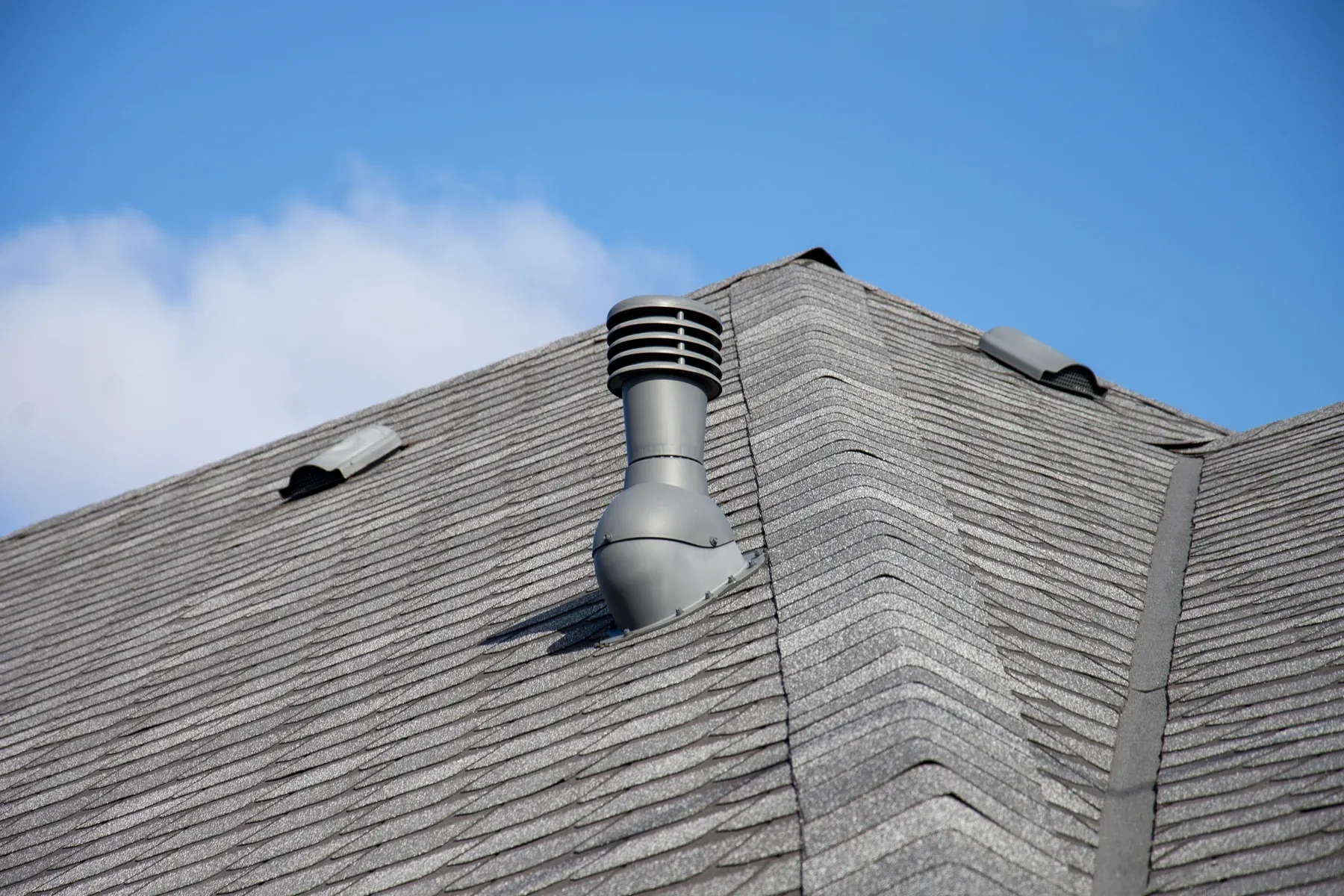
A typical vented attic pulls outside air in through intake vents low on the roof, usually at the soffits under the eaves, and lets warm, humid air out through exhaust vents near the ridge. The result is a steady flow from bottom to top. The DOE guide recommends pairing soffit vents with a ridge vent and installing baffles at the eaves, which keep an air path open and hold insulation back from the soffits.
Balance matters as much as total vent area. The Building America Solution Center's guidance on attic fans recommends keeping intake area at least equal to exhaust area. Owens Corning notes that building codes typically specify a minimum amount of net free vent area based on attic size; your local code and your attic's layout set the actual requirement.
When exhaust outweighs intake, the attic can pull replacement air from the wrong places, including cooled air from the rooms below.
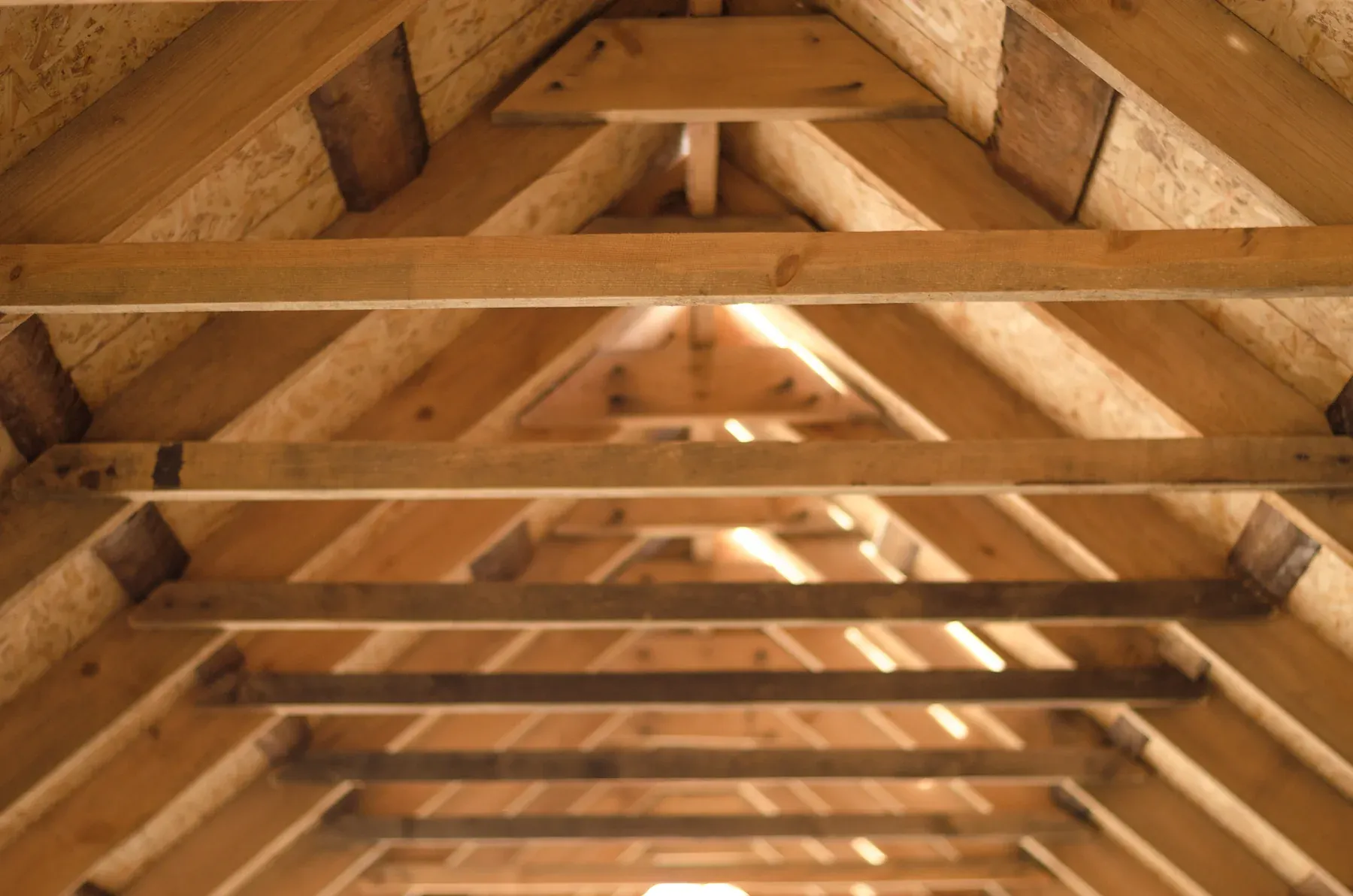 Illustrative photo: rafters and roof decking seen from inside an attic.
Signs your attic may not be breathing well
None of these proves a ventilation problem by itself, since leaks and other issues cause similar symptoms. Each one is a reason to have the attic looked at.
- A wavy or rippled roofline, which can come from moisture-damaged decking.
- Rust on nails, electrical boxes, or other metal in the attic.
- Damp spots or stains on the underside of the roof deck.
- Wet insulation near the eaves, or mold or mildew on attic surfaces.
- Warped soffit panels, bubbled paint on fascia, or worn shingles along roof edges.
- Cooling bills creeping up without an obvious reason.
If you look yourself, Owens Corning suggests staying off the roof and using binoculars from the ground. In the attic, it recommends good lighting, a sturdy walking path, and protective gear. Step only on joists or boards, never on the ceiling between them.
Fans, bath vents, and the ceiling below
Before adding vents, look at what is already sending air into the attic. The DOE guide calls venting bathroom fans, kitchen exhaust, or dryers into the attic a bad practice that can lead to mold and moisture, and recommends routing them outdoors. It also recommends sealing gaps around ducts, wiring, light fixtures, and attic hatches.
Powered attic fans deserve a careful look. The Building America guidance says passive ventilation is generally preferred, because fans can depressurize the house, pull conditioned air and humid outdoor air through ceiling gaps, and interfere with combustion appliances. It points to air sealing, insulation, and sealing ducts in the attic as better first steps.
Some Houston homes are candidates for a different design altogether. The Solution Center's comparison of vented and unvented attics notes that in hot, humid locations an unvented, sealed attic may be advisable, with tradeoffs in cost and moisture control. That is a whole-house decision to make with insulation and HVAC professionals, not a simple roofing add-on.
What gets checked during a reroof
A replacement is the easiest time to correct ventilation, because the decking is exposed and the ridge is open. A thorough inspection should cover:
- Existing intake and exhaust vents, their type, and whether any are blocked.
- Soffits that are painted over, solid, or packed with insulation.
- Baffles at the eaves and the depth of attic insulation.
- Where bath and kitchen fans actually end.
- Decking condition, especially near the eaves and ridge.
Shingle manufacturers publish installation instructions, and their warranty terms may address ventilation. Ask your roofer which requirements apply to the product being quoted. Our guide to manufacturer and workmanship warranties explains how those terms differ.
Questions to ask your roofer
- How much intake and exhaust does my attic have now, and is it balanced?
- Which vents will be added, removed, or kept, and why?
- Are any soffit vents blocked, and will baffles be installed?
- Are any fans or dryers venting into the attic?
- Does the estimate list ventilation work as separate line items?
Ventilation items should appear clearly on your bid; our guide to reading a roofing estimate shows where. For the bigger picture, see the roof replacement timeline.
WorkHorse Roofing serves Houston, Conroe, Baytown and surrounding cities. If you would like your attic and roof looked at together, call (210) 756-2374 to arrange a free roof check. If a replacement is on the horizon, our Houston roof financing page can help you plan the timing.
Sources & further reading
WorkHorse field notes
Straight answers. Clear next steps. Built for Texas homeowners.