
Field notes / Homeowner guides
What Happens During a Roof Replacement: A Homeowner Timeline
Follow the decisions, preparation, installation, and closeout that turn a roof estimate into a completed project.
By WorkHorse Roofing · September 2026 · 5 min read

The short answer
Follow the decisions, preparation, installation, and closeout that turn a roof estimate into a completed project.
The days a crew spends on your roof are only one part of a replacement project. Before installation comes inspection, scope decisions, material selection, and scheduling. After installation comes a walkthrough, documentation, and any remaining follow-up. Understanding the whole sequence makes it easier to plan your household around the work.
This is a homeowner planning guide, not a promise that every roof follows the same schedule. Ask your contractor for a timeline tied to your roof, access conditions, materials, and the weather forecast. Use the stages below to understand what should be settled at each point.
Stage one: define the job and its open questions
Start with the inspection findings and a written scope. Ask the contractor to identify the roof areas included, the proposed roofing system, and any work involving flashing or ventilation. Separate optional selections from work needed to address the roof's condition.
Ask which parts of the estimate are fixed and which depend on what the crew finds after removal. Concealed damage should have an agreed documentation and approval process. A simple question helps: “If you uncover something that changes the price, who contacts me and what will I receive before I approve it?”
Review the repair-versus-replacement questions if the reason for replacing the roof is still unclear. A start date is easier to choose once the work itself makes sense.
Stage two: confirm materials, permissions, and payments
Record the selected product and color in the agreement or its attachments. Ask whether the materials are available, who will confirm delivery, and how a substitution would be approved. Keep a copy of the product information with the estimate so you can check the completed work against the selection.
Ask whether permits or association approvals apply to your property, who handles them, and whether anything must be completed before scheduling. GAF's homeowner project checklist recommends resolving permit responsibilities and coordinating items such as satellite dishes or solar panels in advance.
Match the contract payment schedule to the available funds. If you are borrowing, confirm funding conditions separately with the lender. Our Houston financing guide helps organize that comparison without assuming a particular offer is available.
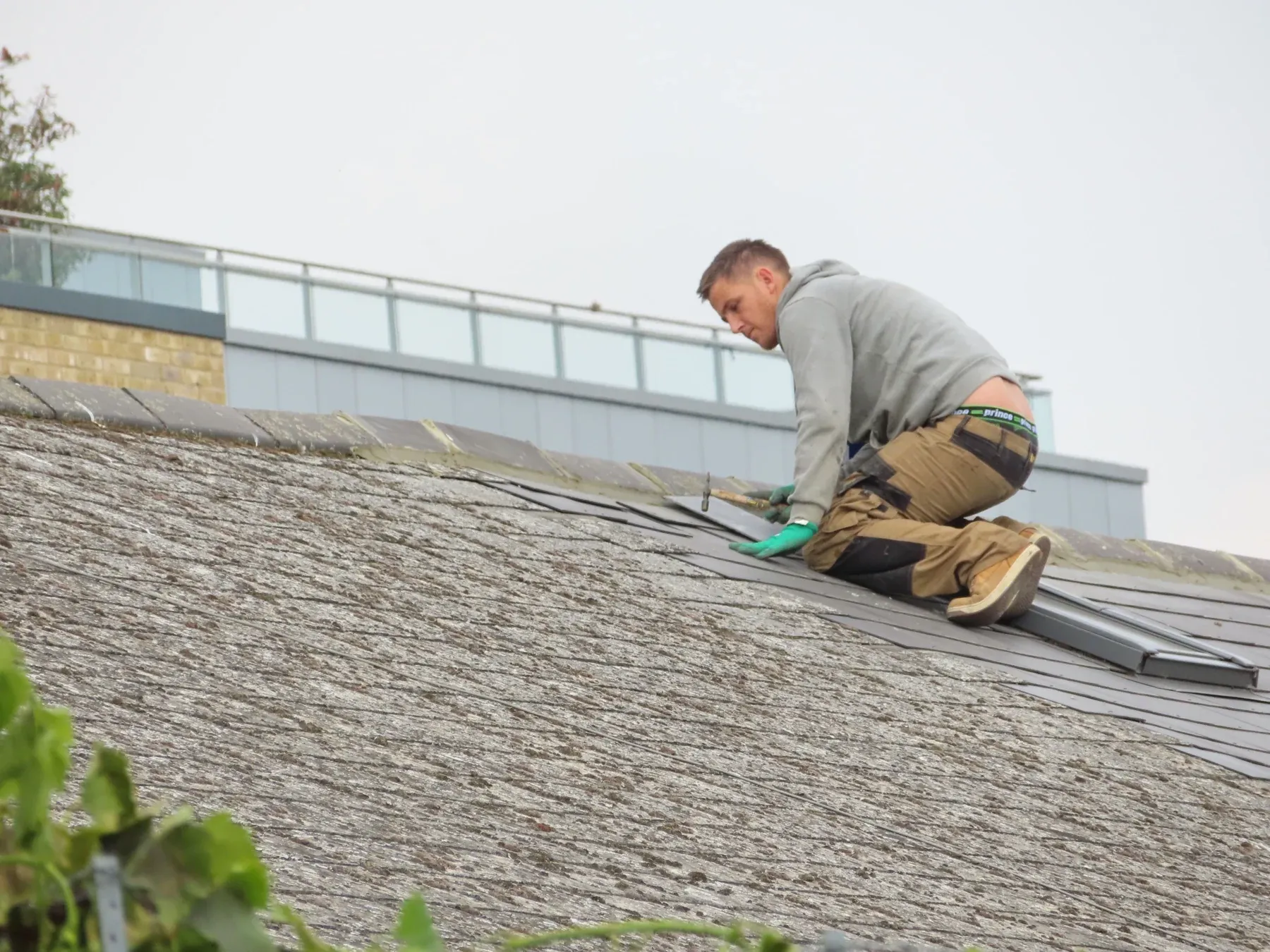
A roofer installs roof covering during a roofing project.
Stage three: prepare the property and your routine
Ask where deliveries, equipment, and debris containers will go. Discuss driveway access, gates, landscaping, and shared spaces. Identify an entry route your household can use safely, and ask how the crew will mark areas to avoid.
Plan for noise and vibration. Think through work calls, pets, children, deliveries, and anyone who needs a quiet daytime environment. Tell the contractor about access limitations or sensitive areas before work begins, when adjustments are easier to arrange.
Choose a household point of contact and confirm the crew's contact person. Write down when you should expect updates, particularly if you will be away during the day. A short communication plan prevents an unanswered phone call from becoming a rushed decision about additional work.
Stage four: removal and assessment of the exposed roof
The crew's work follows the agreed scope and the requirements of the selected system. Removing existing roofing can reveal conditions that were not visible during the initial inspection. Ask how the contractor will document those findings and protect the work area while decisions are made.
Do not climb up to inspect an open roof yourself. Request photographs and an explanation of what you are being asked to authorize. A change order should identify the added work and its price rather than relying on a verbal understanding in the middle of installation.
GAF's roof replacement timing guide explains that access, concealed issues, and ventilation work can affect duration. Treat an early schedule as a plan with stated assumptions, not a guarantee that unexpected conditions cannot occur.
Stage five: installation and weather decisions
Ask for a homeowner-level explanation of the roofing layers and details included in your project. The contractor should be able to explain how the selected system addresses the roof deck, water protection, penetrations, edges, and finished roof covering. This is about understanding the scope, not directing the crew's installation method.
Discuss weather procedures before the work starts. Ask who decides whether the crew proceeds, how an exposed area is protected, and when you will hear about a schedule change. Keep some flexibility around dependent plans, such as another exterior trade arriving immediately after the expected completion date.
If the schedule changes, ask what changed and which next step is now expected. A revised sequence is more useful than repeatedly asking whether the original completion time still holds.
Stage six: walkthrough, cleanup, and records
Before final payment, review the completed scope with the contractor and note anything requiring follow-up. Ask about cleanup of the yard, driveway, and work areas, and confirm when equipment and excess materials will be removed. Follow the contractor's guidance about safely returning to areas used for construction.
Collect the final invoice, approved change orders, product details, applicable warranty documents, and any completion photographs or inspection records available for your project. Ask who handles warranty registration if it is required and how to request service later. Save the contractor's contact details somewhere you can find them without searching old text messages.
For an insurance-funded project, ask your insurer which completion records it requires; see our insurance funding-gap guide for payment questions. To begin planning, contact WorkHorse Roofing or review roof replacement in Houston. Bring your scheduling constraints along with your roof questions so the project can be planned around both.
Sources & further reading
WorkHorse field notes
Straight answers. Clear next steps. Built for Texas homeowners.