
Field notes / Homeowner guides
Roof Repair or Replacement? Questions That Make the Decision Clearer
Learn how to compare a targeted repair with a full replacement using condition, repair history, scope, and the questions in an inspection report.
By WorkHorse Roofing · September 2026 · 5 min read
The short answer
Learn how to compare a targeted repair with a full replacement using condition, repair history, scope, and the questions in an inspection report.
A missing shingle does not tell you everything about a roof. Neither does its birthday. The repair-or-replace decision becomes more useful when an inspection explains the source of the problem, its extent, and what each proposed solution would actually accomplish.
For homeowners, the goal is not to become a roofer. It is to understand the recommendation well enough to compare alternatives and authorize a defined piece of work. Bring these questions to the inspection conversation, especially if two estimates recommend very different approaches.
Begin with the symptom and its history
Before the visit, write a short account of what you noticed. Was there a ceiling mark after one storm, a recurring drip, a displaced piece of roofing in the yard, or a concern raised during another home project? Note when you first saw it and whether it changed.
Gather earlier repair invoices and photographs if you have them. A dated history helps the contractor distinguish a new complaint from a repeated one. Say when you do not know something. “We bought the house five years ago and do not have the installation record” is more useful than guessing the roof's age.
Keep your own observations at ground level. GAF's residential roofing guidance identifies missing or damaged shingles, leaks, water stains, and sagging among signs that warrant professional attention. Those signs prompt an assessment; they do not by themselves establish the right scope.
Ask the inspector to show the source
Request labeled photographs and a plain-language explanation of the findings. Ask which image shows the suspected source and which images show the resulting damage. If a diagnosis is uncertain, ask what additional access or investigation would help resolve it.
A useful report should let you answer three questions: where is the problem, what work is proposed there, and why is that work expected to address it? You do not need a long technical lecture. You need an explanation that ties the recommendation to your house.
For a ceiling stain, for example, ask whether the proposed roofing work addresses the identified entry point and whether interior finishing is included. This keeps a roof estimate from being mistaken for a complete restoration estimate.

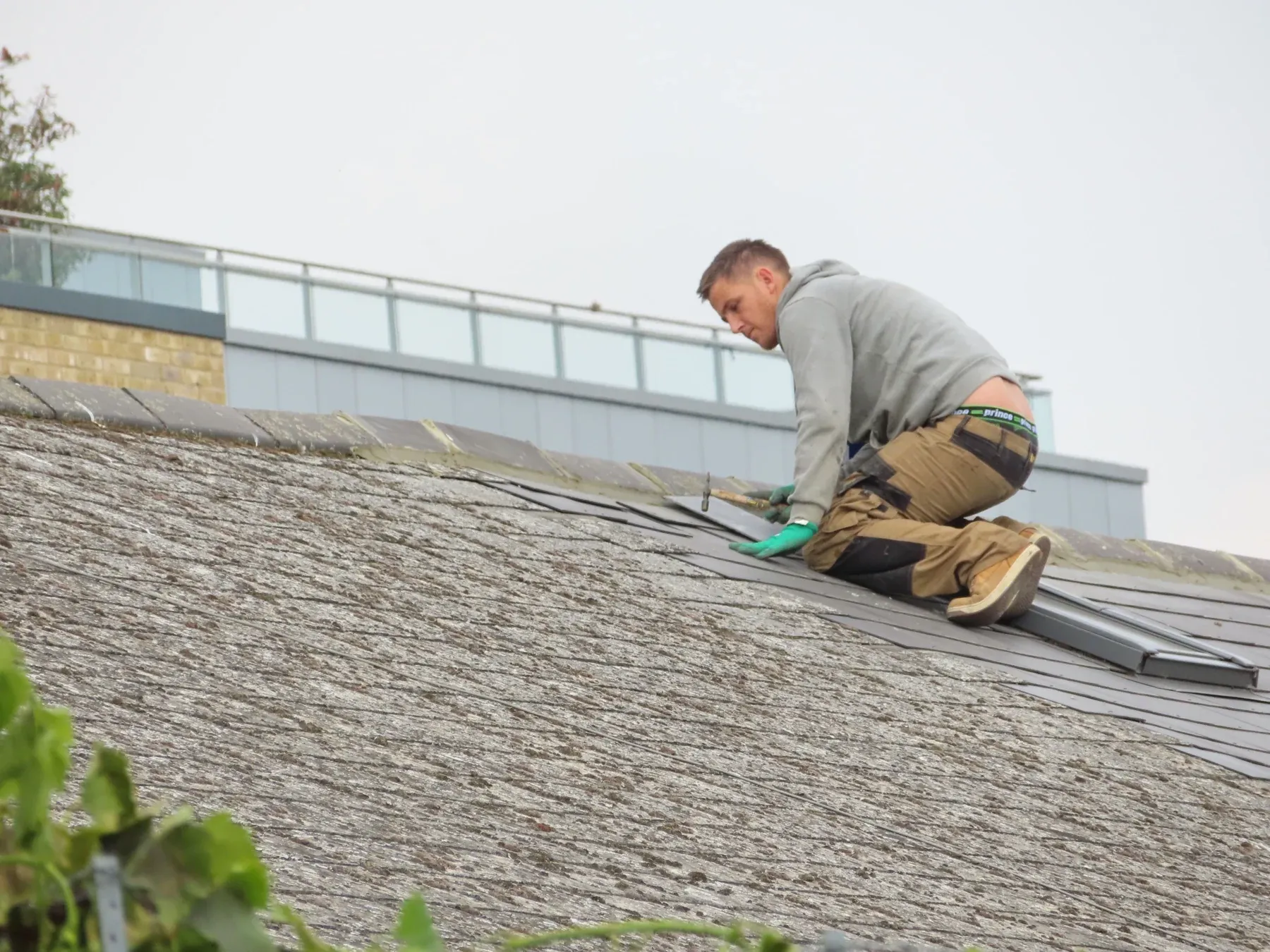
Weathered roof tiles illustrate why visible condition calls for an assessment.
Understand what a targeted repair leaves in place
When repair is proposed, ask for a defined repair area, the materials being replaced, and the surrounding components the contractor plans to inspect. Ask what condition the remaining roof is in and what limitations the repair carries.
A useful question is: “After this work, what concerns would you still want me to monitor?” The answer helps distinguish a durable localized solution from a temporary measure while you plan a larger project. Get the distinction in writing, including any warranty terms offered for the specific work.
GAF's guide to roof repairs recommends professional assessment and prompt attention to roofing problems. Treat that as a reason to get clear findings, rather than a reason to approve the largest possible project without explanation.
Ask why replacement changes the outcome
When replacement is recommended, ask what makes repair insufficient for this roof. Request an explanation of the extent of deterioration or damage, the pattern of recurring issues, and any questions that cannot be resolved until materials are removed.
Then ask what the replacement scope includes beyond the visible shingles. Does it address the components associated with your current problem? How will the contractor handle concealed decking damage? What is the process for documenting and approving a change in price?
If the explanation is simply that the roof is old, ask for the condition findings behind that judgment. Age is context. Your decision should also account for what the inspection shows and what the proposed work will change.
Compare the alternatives on the same terms
Create two short columns, one for repair and one for replacement. Under each, record the price, work included, exclusions, expected disruption, and written warranty terms. Add a line for unresolved questions. This makes an incomplete cheaper estimate easier to recognize without assuming the more expensive estimate is automatically better.
Consider two illustrative situations. One homeowner has a newly identified problem in a defined area and an otherwise reassuring inspection. Another has repeated complaints in several areas and a history of temporary fixes. The same price for a repair can represent a very different decision in those two cases.
Avoid relying on a universal rule such as “replace whenever repairs exceed a certain percentage.” A percentage cannot tell you whether the underlying issue has been correctly identified. Ask the contractor to explain the tradeoff for your roof instead.
Consider timing without letting it make the decision alone
Tell the contractor about an active leak, an upcoming sale, planned solar work, or other scheduling constraints. Ask which items need prompt attention and which can be planned. If temporary protection is proposed, get its scope and follow-up plan clearly documented.
When a storm is involved, keep the construction assessment separate from the insurer's coverage decision. Our hail documentation guide helps you organize observations, while the insurance funding-gap guide explains how to review the payment side.
If replacement is the supported recommendation, review the replacement process and Houston financing planning page before deciding on timing and payment. You can also contact WorkHorse Roofing with your observations and repair history. The best next step is a roof-specific explanation you can understand and keep with your home records.
Sources & further reading
WorkHorse field notes
Straight answers. Clear next steps. Built for Texas homeowners.