Field notes / Homeowner guides
Solar Panels and a New Roof: How Detach and Reset Works
Replacing a roof under solar panels means the array comes off and goes back on. Here is the usual sequence and the questions to settle before any work starts.
By WorkHorse Roofing · October 2026 · 5 min read
The short answer
Replacing a roof under solar panels means the array comes off and goes back on. Here is the usual sequence and the questions to settle before any work starts.
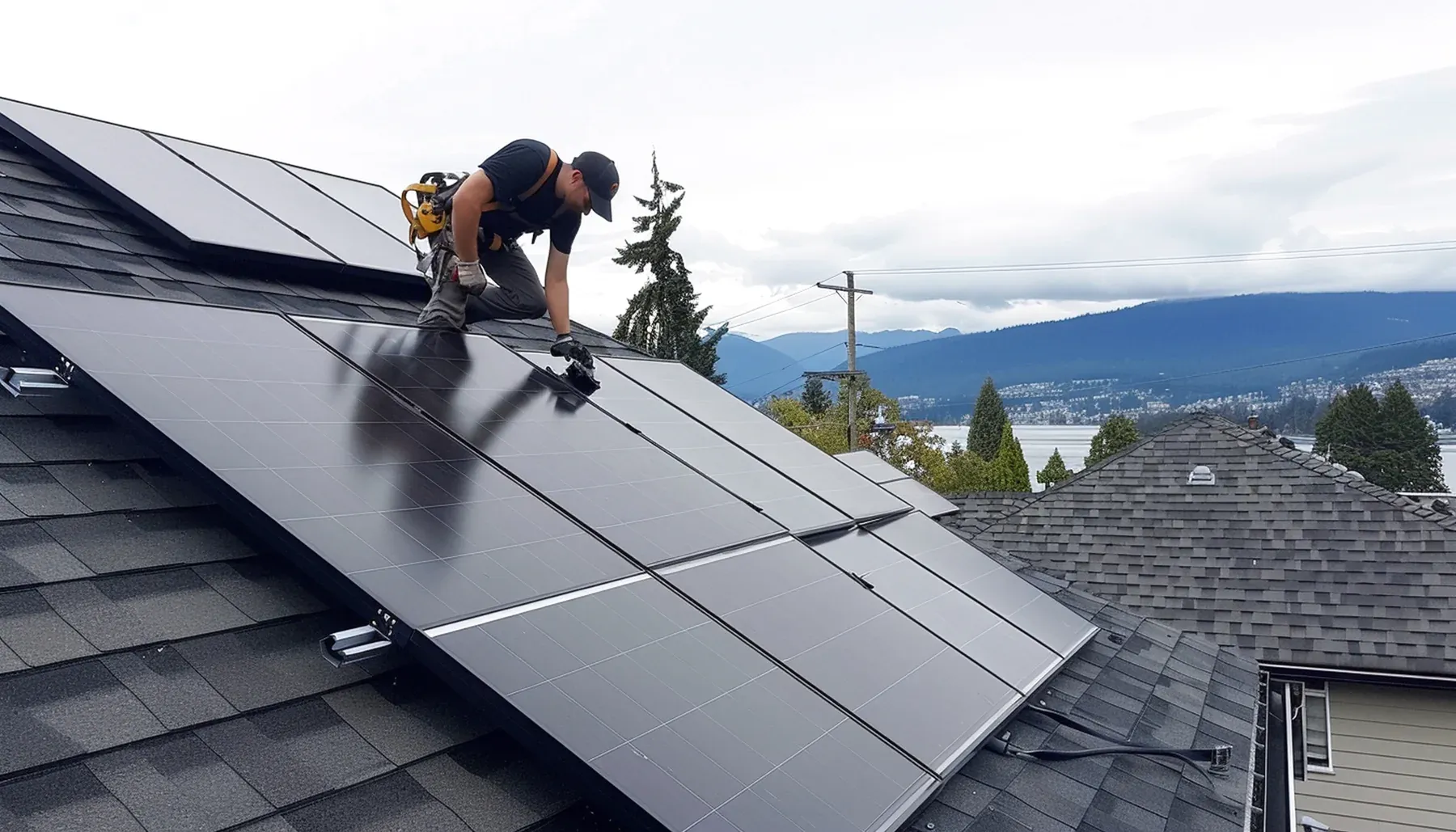
If your roof needs replacing and there are solar panels on it, the panels have to come off first. The U.S. Department of Energy (DOE) says so plainly in its guidance on rooftop systems: during a roof replacement, the panels and the mounting system are removed so the roofing work can be done. In the trade this is usually called detach and reset, or remove and reinstall.
The job is routine, but it touches two systems at once, your roof and an electrical generating system, and often a third party such as a lease company. WorkHorse Roofing offers solar panel detach and reattach as part of roof work. The steps below describe the usual sequence and the questions worth settling first, whoever does your project.
Start with who owns the system
Your first call depends on whether you own the panels or someone else does. If you bought the system, you are generally the decision-maker, though the original installer's warranty terms may still matter. If you lease it or buy its power under a power purchase agreement, a company owns the equipment on your roof.
The Federal Trade Commission's solar guide for homeowners suggests checking, before you sign a lease or agreement, what happens if the roof needs repair after installation, and notes the leasing company will probably handle maintenance, a point to confirm in the contract. If you already have a contract, look for the section on roof work now.
Gather these before scheduling:
- The purchase, lease, or power agreement and any warranty documents.
- The installer's or system owner's contact information.
- Your monitoring app or account login.
- Any notice or approval requirements for removal.
Document the system before removal
Good records protect everyone. Before the array comes down, collect:
- Photos of the full array from the ground, showing layout and panel positions.
- Screenshots of production history from your monitoring app over several clear days.
- Photos of the inverter and any visible equipment, including existing damage such as cracked glass, loose conduit, or chewed wiring.
- A list of components that will be removed, such as panels, rails, and mounts.
Ask the crew to label panels and wiring so the system goes back in the same arrangement. Once the panels are off, ask for photos of the roof that has been hidden underneath, which is often the first clear look at that surface in years.
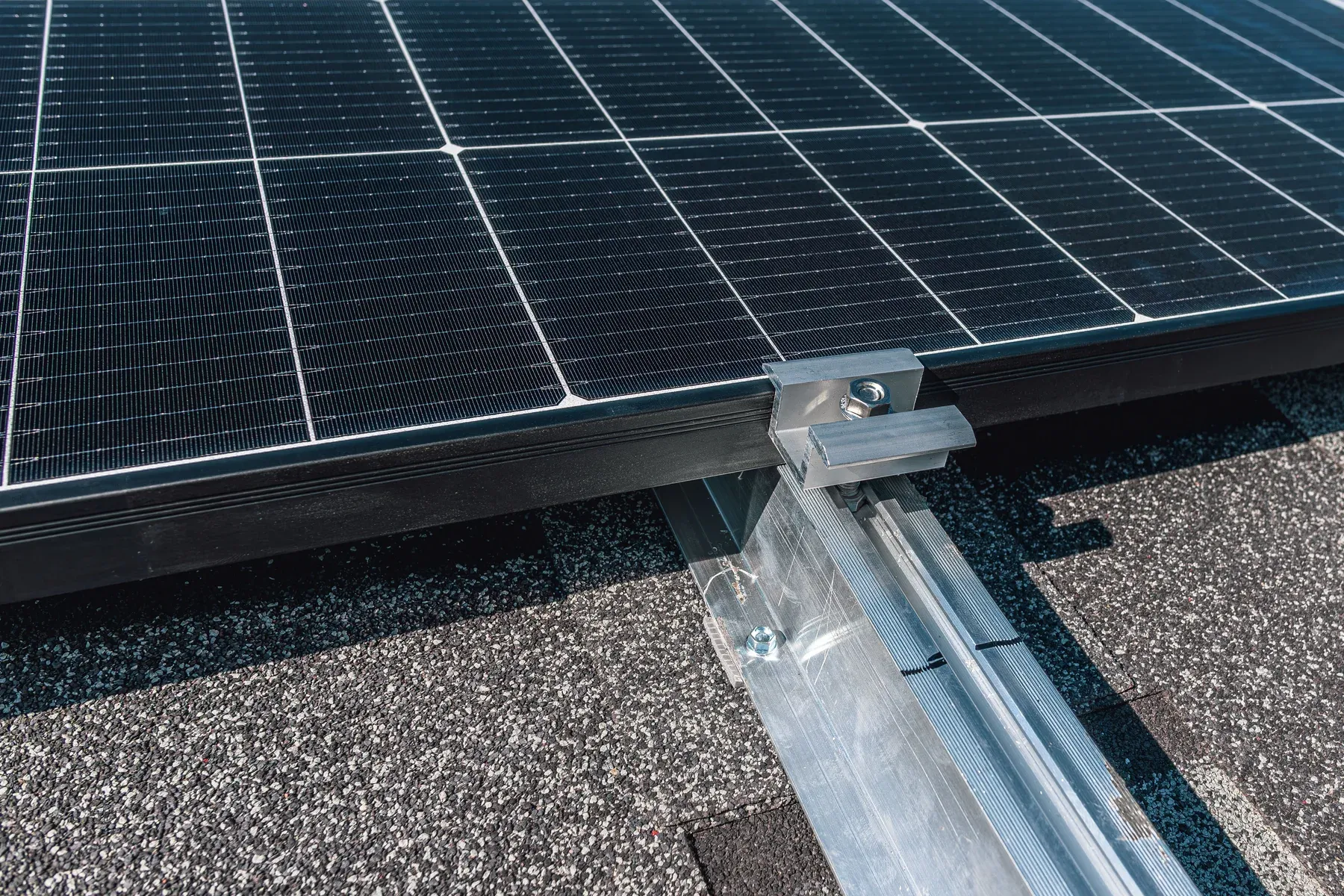 Illustrative photo: a mounting rail and clamp under a solar panel.
Shutdown, removal, and storage
This part is not a homeowner task. The Occupational Safety and Health Administration's lockout and tagout guidance for solar work explains that because solar equipment generates electricity, workers should cover the panels as well as isolate connected circuits, and must discharge any stored energy before servicing. Leave connectors, wiring, and inverters to trained technicians.
Questions about removal and storage:
- Who performs the electrical shutdown and disconnection, and what qualifications do they hold?
- Will panels be stored on site or off site, and how are they protected from weather, damage, and theft?
- Who is responsible if a panel is damaged during removal or storage?
- Will rails, mounts, and wiring be reused, or will some parts be replaced, and how is that priced?
Expect the system to produce nothing while it is down. Ask for a realistic window, keeping in mind that weather and inspection findings can shift any roofing schedule.
Roofing around mounts and penetrations
With the panels off, the replacement proceeds much like any other, with one extra focus: every mount is a fastener path through your new roof. How those points are sealed and flashed has a lot to do with whether the roof stays dry around the array.
Ask your roofer to explain:
- Whether mounts will go back into the same locations or new ones, and how unused holes will be sealed.
- What flashing will be used at each mount and whether it is new.
- How mounts will be attached to the roof structure.
- How the roof under the array will be inspected and photographed before the panels return.
For a broader view of the project sequence, our roof replacement timeline walks through each stage.
Reinstall, restart, and confirm output
After the roof is finished, the panels go back on their mounts and the system is reconnected and restarted. Ask whether your city or utility requires an inspection or notice for reconnection, and who handles it.
Then check the results yourself. Compare production on a few clear days with the screenshots you saved earlier, and confirm that every panel or optimizer reports in the app. DOE notes that most systems lose only about 1% of output a year, so a sudden, noticeable drop after reinstallation is worth raising promptly rather than waiting.
Keep a closeout file with photos of the flashing at mounts before panels went back, the reinstall date, any replaced parts, and who to call about output questions.
Questions to settle in writing
Use this list to compare bids and to align the roofer and the system owner:
- Who removes and reinstalls the panels, and who performs the electrical work?
- Has the lease company or installer been notified, and what does it require?
- How will the array be documented, labeled, and stored?
- Which parts are reused, which are replaced, and at what price?
- How will output be checked after the restart, and who responds if it is low?
- Who covers a leak at a mount: the roofer, the solar company, or both, and under which terms?
That last question is worth asking each party separately. Our guide to manufacturer and workmanship warranties explains how roofing coverage is usually split, and our guide to reading a roofing estimate shows where detach and reset should appear as a line item.
If you have not installed solar yet, DOE's homeowner's guide to solar suggests weighing your roof's age and how long until it needs replacing before you commit. To talk through a reroof with panels in place, call (210) 756-2374 for a free roof check, and see our Houston roof financing page if budget affects timing.
Sources & further reading
WorkHorse field notes
Straight answers. Clear next steps. Built for Texas homeowners.