Field notes / Insurance
ACV or RCV? How Your Texas Policy Pays for a Roof
Replacement cost and actual cash value can pay very different amounts for the same roof. Here is how each works in Texas and what to check on your declarations page.
By WorkHorse Roofing · October 2026 · 5 min read

The short answer
Replacement cost and actual cash value can pay very different amounts for the same roof. Here is how each works in Texas and what to check on your declarations page.
Two neighbors can share the same storm and the same roof size and still receive very different insurance checks. One common reason is how each policy values the roof: replacement cost value (RCV) or actual cash value (ACV). The difference is easy to overlook when you buy a policy and hard to ignore after a claim.
This guide explains both approaches in plain terms and lists questions to ask your agent before the next storm. It does not predict what any policy will pay. Your policy documents and your insurer decide that.
Replacement cost vs. actual cash value
The Texas Department of Insurance explains that replacement cost coverage pays to repair or rebuild at current prices without reducing the payment for age or condition, while actual cash value coverage subtracts depreciation for age and wear (TDI: replacement cost or actual cash value). ACV policies generally cost less, and they generally pay less when you file a claim.
For a roof, the gap tends to widen with age. The NAIC notes that insurers usually base depreciation on the condition of the property when it was damaged, the cost of a new one, and how long it would normally last (NAIC: replacement cost vs. ACV for your roof). TDI's own example shows that on an older roof, the depreciated value can shrink to the size of the deductible, leaving nothing paid under ACV.
How a replacement cost claim is often paid
Even with replacement cost coverage, money often arrives in stages. TDI's home insurance guide describes a common pattern:
- A first check after the adjuster inspects, based on the estimated repair cost minus depreciation and your deductible
- A second payment for the withheld depreciation once the insurer receives the bill for completed work
- Usually, a time limit for finishing repairs, which affects whether you can collect that second payment
That withheld amount is often called holdback or recoverable depreciation. It is not automatic. Ask your insurer what documents it needs, who submits them, and the deadline, and keep the answer in writing.
If you have a mortgage, TDI notes the check is usually made out to you and your lender, and the lender may release funds as work progresses. Build that step into your timeline.
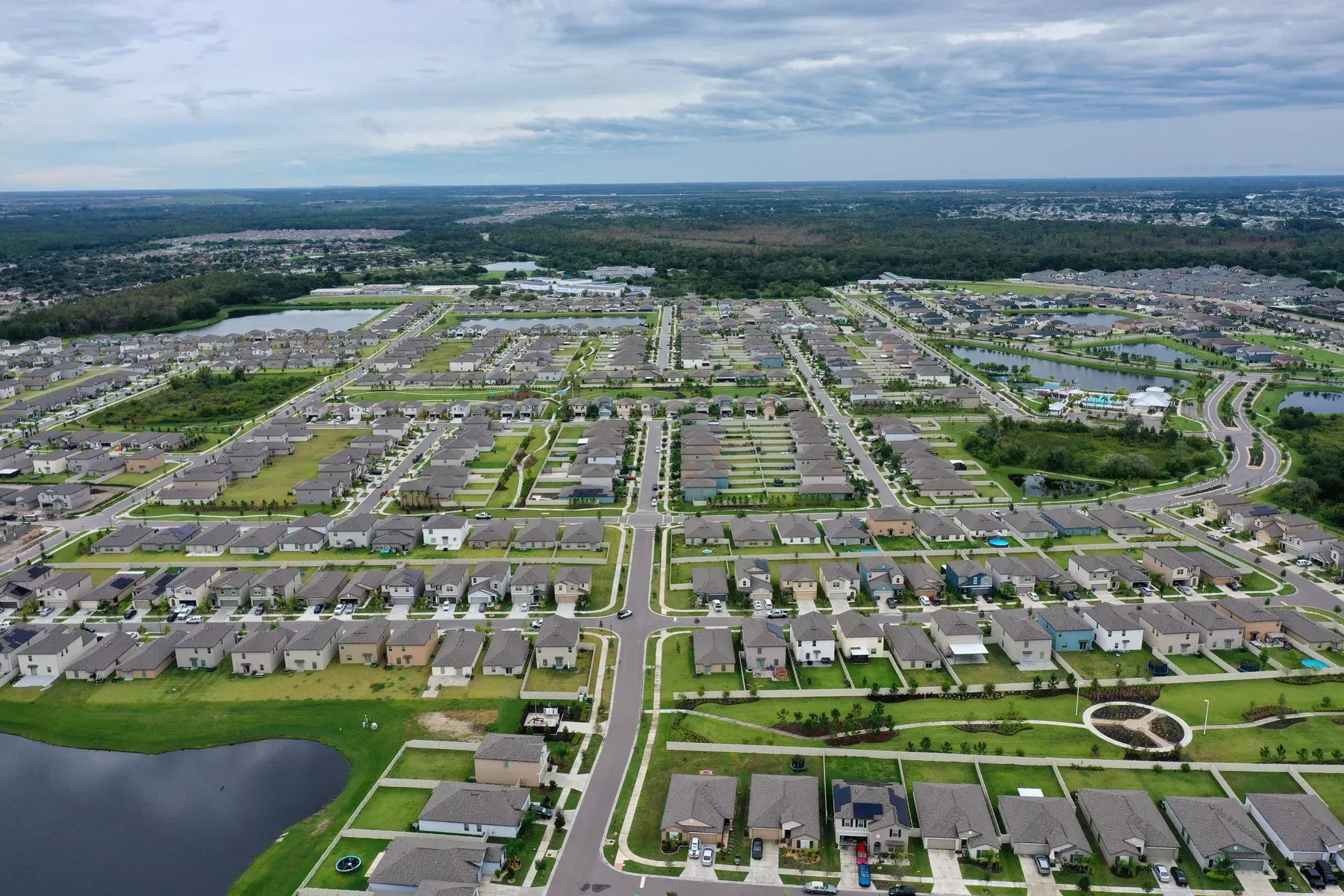 Illustrative photo: rows of suburban roofs seen from above.
Roof terms that change the math
Some policies treat the roof differently from the rest of the house. Read your declarations page, endorsements, and renewal notices for:
- A switch to ACV as the roof ages. TDI warns that some insurers change roof coverage from replacement cost to actual cash value once a roof reaches a certain age, and may stop covering a roof in poor condition (TDI: insurance and your roof).
- A separate wind and hail deductible. TDI says this deductible can differ from the one for other damage, which may mean paying more out of pocket on a roof claim.
- Percentage deductibles. A deductible stated as a percentage of insured value has to be converted to dollars before you know your share; TDI shows the math in its deductibles tip.
- Cosmetic damage exclusions. Texas policies that give an impact-resistant roof credit may carry an optional endorsement excluding hail damage that only changes how the roof looks; under TDI Bulletin B-0030-98 it applies only if you sign it.
These terms are easy to miss. TDI's renewal checklist suggests reading each renewal notice and checking its last pages for new endorsements or exclusions.
Questions to ask your agent before the next storm
Calm weather is the right time to read your policy. TDI's guide to reading a declarations page explains that it lists your coverages, limits, and deductibles, sometimes with a separate deductible for wind and hail, along with property details such as roof age. Ask your agent:
- Is my roof covered at replacement cost or actual cash value today?
- Will that change at a certain roof age, and how will I be told?
- What is my wind and hail deductible, in dollars?
- Is there a cosmetic damage exclusion or another roof endorsement?
- With replacement cost, what must I submit to collect withheld depreciation, and by when?
- Is the roof age on my declarations page correct?
Write the answers down with the date and the name of the person who gave them. If you are planning a new roof anyway, also ask whether impact-resistant shingles would change your premium; our article on Class 4 shingles in Houston explains what that rating means.
What a roofer can and cannot do here
A roofing contractor can inspect the roof, document what is there, and give you a written scope and price. Coverage decisions belong to your insurer. Texas does not allow a contractor doing the work on your roof to also act as your adjuster on that claim, and it does not allow a contractor to waive or rebate your deductible (TDI: roofing and insurance, know the law).
If you disagree with how a claim was valued, ask the insurer for its explanation and the policy language it relied on, and keep the conversation in writing.
Planning for the part insurance may not pay
Between the deductible, depreciation, and items outside the claim, a covered roof can still leave a balance. Our guide to insurance funding gaps breaks that balance into parts, and our Houston roof financing comparison covers ways to pay it. You can also review roof replacement financing in Houston. If a storm just passed, start with documenting hail damage.
Need a documented look at your roof before you talk with your insurer? Call (210) 756-2374 to book a free roof check. We will explain what we see; your insurer decides what the policy covers.
Sources & further reading
WorkHorse field notes
Straight answers. Clear next steps. Built for Texas homeowners.