Field notes / Homeowner guides
Class 4 Impact-Resistant Shingles in Houston: What the Rating Means
Class 4 is a lab impact rating, not a hail-proof promise. Learn what UL 2218 and FM 4473 measure, how to verify a product, and what to ask your insurer.
By WorkHorse Roofing · October 2026 · 5 min read
The short answer
Class 4 is a lab impact rating, not a hail-proof promise. Learn what UL 2218 and FM 4473 measure, how to verify a product, and what to ask your insurer.
After a hailstorm, "Class 4" comes up in a lot of roofing conversations. It shows up on estimates, brochures, and sometimes in calls with an insurance agent. The label is useful, but narrower than many homeowners expect.
This guide covers what the rating measures, where its limits are, how to confirm the product going on your roof, and what to ask your insurer and your roofer. It will not pick a brand, but it will help you compare bids on equal terms.
What a Class 4 rating measures
Impact ratings for steep-slope roofing come mainly from two lab tests. UL 2218 drops steel balls onto roofing samples, and FM 4473 launches balls of ice at them. Both sort products into Classes 1 through 4, with projectiles ranging from about 1¼ inches for Class 1 up to 2 inches for Class 4.
According to the Roof 101 overview from the Insurance Institute for Business & Home Safety (IBHS), a product passes a class when no crack shows on the back of the sample after two strikes in the same spot. Class 4 is the top of that scale. Impact-resistant shingles typically get there with a reinforcing backing or with polymer-modified asphalt, and IBHS says the polymer approach is becoming the more common one.
Put simply, the product resisted cracking through at the test's largest size.
What the rating does not promise
Class 4 is not a hail-proof label. The pass or fail check looks for a crack through the material, so a shingle can pass while still showing dents, bruising, or granule loss on its surface. IBHS also points out that these standardized tests are run on new products and do not account for weathering or age.
There is a bigger question about how well a steel ball stands in for real hail. Two IBHS researchers explained in Professional Roofing that both UL 2218 and FM 4473 rest on hail-energy assumptions drawn from 1930s research, and that their field measurements of real hailstones did not match those assumptions. That research led IBHS to build lab-made hailstones and its own rating program.
That matters when you shop. In its 2025 shingle ratings update, IBHS tested 24 impact-resistant products bought at retail and scored dents, tears, and granule loss. Most rated Good, none rated Excellent, and IBHS advises against products rated Marginal or Poor where hail is common. Two shingles can carry the same Class 4 label and still perform differently.
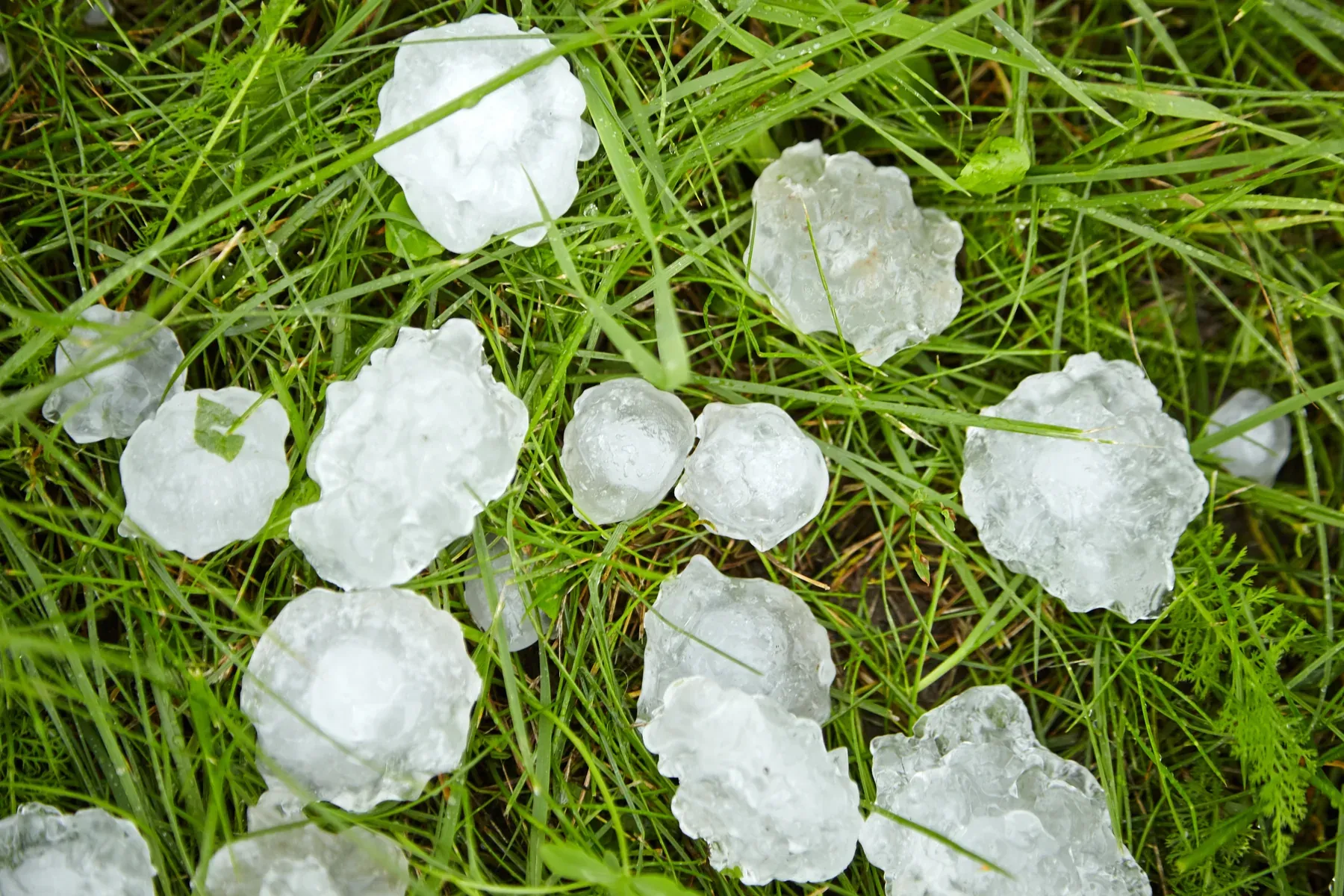 Illustrative photo: large hailstones on a lawn after a storm.
How to verify the product on your roof
A verbal "it's Class 4" is not enough for your records. Ask for the manufacturer, product line, and impact class in writing on the estimate, then check that what arrives matches.
The Texas Department of Insurance (TDI) roofing discount page describes the labeling the Texas Windstorm Insurance Association (TWIA) requires: a mark from UL or another approved lab showing the UL 2218 class, plus the manufacturer, year made, and brand. Products that pass the test but lack that labeling do not qualify for TWIA credits. TDI also describes form PC068, which a contractor completes after installation to document an impact-resistant roof covering. Other insurers may use their own forms.
Simple steps that help later:
- Photograph a product label and a bundle wrapper before installation.
- Keep the contract, final invoice, and any installation form together.
- Note the installation date so your insurer can update the roof's age.
- Look up the product on the IBHS ratings list for a second data point.
Ask your insurer before counting on a discount
TDI says each insurer decides its own discount amounts, which test standards it accepts, and what paperwork it needs, while a Class 4 covering would earn the highest credit an insurer offers. In September 2026, TDI issued Commissioner's Bulletin B-0008-26 encouraging insurers to offer actuarially supported discounts for mitigation steps such as impact-resistant roofing. It encourages insurers but does not change any policy on its own.
Ask about conditions, too. Texas has long allowed an optional endorsement, tied to impact-resistant roof credits, that excludes hail damage affecting only a roof's appearance. Under TDI Bulletin B-0030-98, that endorsement is void unless the insured signs it, and a homeowner who declines can be offered the policy without the roof credit. Terms change, so ask your agent what applies to your policy today and request the answer in writing.
Our guide to ACV and RCV roof coverage covers other policy terms worth reviewing in the same conversation.
HOA rules and installation details
If you live under a property owners' association, check its approval process before you order. Texas lawmakers addressed this in 2011: House Bill 362 keeps associations from prohibiting or restricting shingles designed primarily to resist wind and hail, as long as they resemble the shingles used in the subdivision, are more durable and of equal or better quality, and match the look of nearby homes. Ask your association what it wants to see before work starts.
Installation matters as much as the label. The FORTIFIED Roof program from IBHS pairs roof coverings with upgrades such as a sealed roof deck, ring-shank nails, and reinforced edges. For its optional hail supplement, shingles must be rated Good or Excellent by IBHS, not only Class 4. Even without a designation, those details make good questions for any bid.
Questions to ask before you choose
Bring this list to each estimate:
- What exact product and impact class are you quoting, and under which test standard?
- How does this product rate on the IBHS hail list, if it appears there?
- Will the class label be visible on the material, and will you provide installation paperwork?
- Which underlayment, nailing pattern, and edge details are included?
- What do the manufacturer's warranty and your workmanship terms say about hail?
- How does the price compare with a standard architectural shingle on the same scope?
If you are weighing a different material entirely, our metal versus shingles comparison walks through the tradeoffs. For storm concerns on your current roof, start with the hail documentation guide.
Impact-rated shingles are part of what WorkHorse Roofing installs. To compare options for your house, call (210) 756-2374 to set up a free roof check. If timing depends on budget, review roof replacement financing in Houston before you decide.
Sources & further reading
WorkHorse field notes
Straight answers. Clear next steps. Built for Texas homeowners.