Field notes / Storm damage
Hurricane Season Roof Prep for Houston Homes
A ground-level checklist for getting your roof, gutters, trees, photos, and insurance paperwork ready before June 1, plus how to stay safe after a storm passes.
By WorkHorse Roofing · October 2026 · 5 min read
The short answer
A ground-level checklist for getting your roof, gutters, trees, photos, and insurance paperwork ready before June 1, plus how to stay safe after a storm passes.
Atlantic hurricane season runs from June 1 through November 30, and Harris County's emergency management office asks residents to get ready before it begins. Most roof-related preparation is unglamorous: looking, clearing, trimming, photographing, and reading your policy. It is also the kind of work that gets hard to finish once a storm is in the forecast.
Use this checklist in spring, ideally before June 1, and revisit it if a storm develops mid-season. None of it requires you to climb onto the roof.
Check the roof from the ground
Walk the perimeter of the house with binoculars or your phone's zoom. You are looking for changes, not making a diagnosis.
- Shingles that are missing, lifted, creased, or a different color from their neighbors.
- Flashing around pipes, vents, and chimneys that looks bent or loose.
- Sagging rooflines or areas where debris collects.
- Inside, ceiling stains or new marks near exterior walls.
The Insurance Institute for Business & Home Safety (IBHS) recommends in its 2026 hurricane-season guidance scheduling a professional roof inspection and making needed repairs ahead of time. It also warns that aging asphalt shingles can fail at wind speeds far below hurricane force, letting wind-driven rain into the house. If something looks off, spring is the time to have it assessed. Our repair or replacement guide covers the questions to ask.
Clear gutters, downspouts, and drainage
Clogged gutters overflow during heavy rain and can send water toward fascia boards, walls, and foundations. The National Weather Service (NWS) hurricane safety checklist lists clearing loose and clogged gutters and downspouts as a before-the-season task, and Ready.gov gives the same advice.
While you are at it:
- Reattach or report gutter sections that pull away from the house, since wind can catch them.
- Make sure downspouts discharge away from the foundation.
- Note debris piled in roof valleys and ask a professional to clear it.
If you clean gutters yourself, use a stable ladder on firm ground, have a helper nearby, and stay off the roof surface.
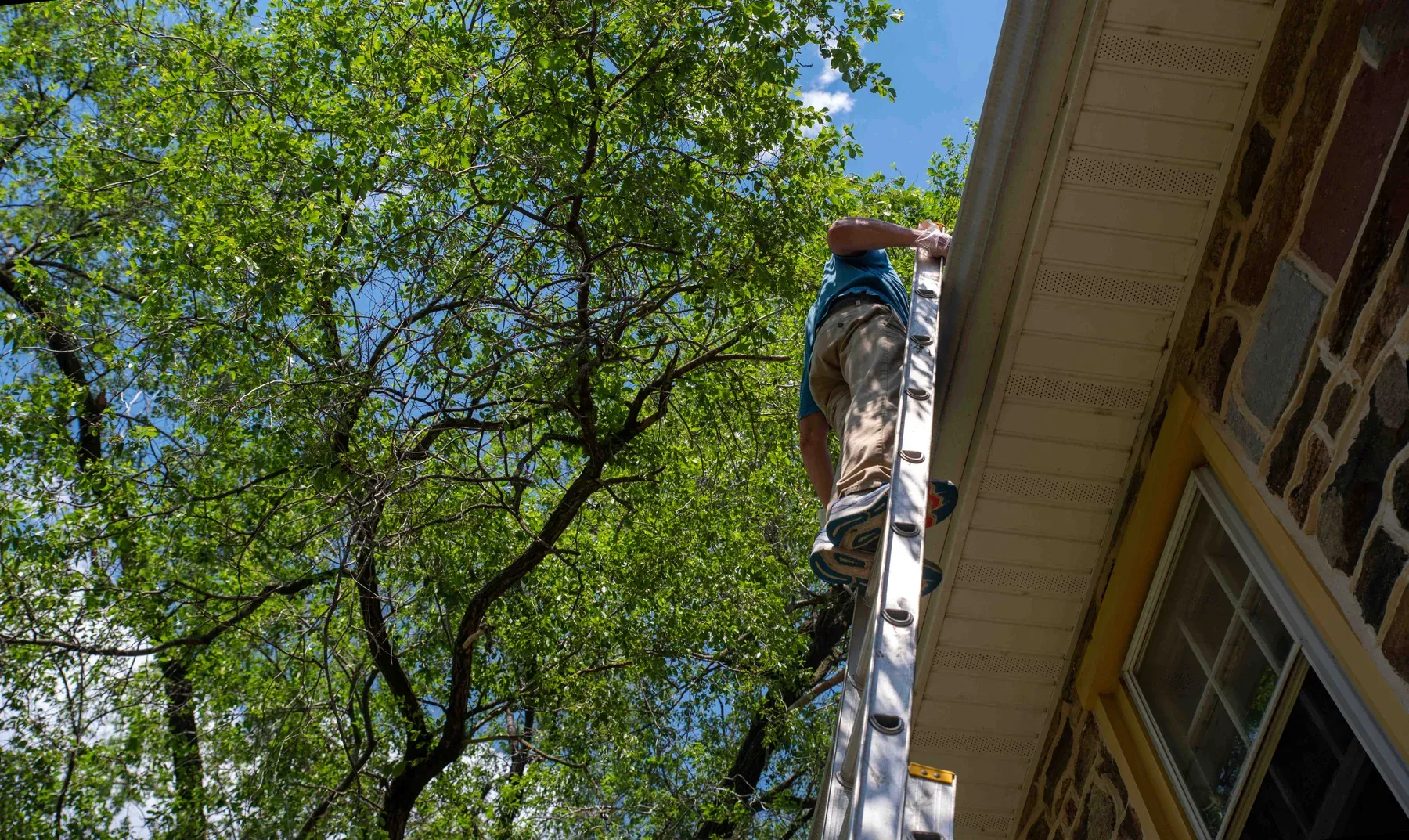 Illustrative photo: clearing a gutter from a ladder before storm season.
Trim trees and plan for loose items
Branches that hang over the roof can scrape shingles in normal wind and become projectiles in a storm. The NWS checklist includes trimming trees and shrubbery before the season, and IBHS recommends trimming limbs near the roof. Hire a tree service for large or high limbs, and contact your utility about anything near power lines.
Loose items are the other half of wind prep. NWS advises storing lawn furniture, garbage cans, and garden tools when a watch is issued, and IBHS adds grills and similar objects. Write a short list now of what needs to come inside so it goes quickly later. IBHS also suggests checking whether your garage door carries a label showing it was tested for wind loads suited to your area.
Take before-season photos
A dated set of photos taken in calm weather gives you a reference point if you later need to explain what changed. Capture each roof slope from the ground, the gutters, exterior walls, fences, and interior ceilings. The Texas Department of Insurance (TDI) hurricane-season tips also recommend photographing or filming every room, closet, and the garage as a home inventory, and keeping copies of your declarations page and insurer contacts somewhere you can reach if you evacuate.
Store the files somewhere off the phone, such as cloud storage or an email to yourself. Before-photos show prior condition. They do not prove what caused later damage, which is why our hail documentation guide recommends keeping observations and conclusions separate.
Review your policy, including wind and TWIA
TDI notes that many home policies along the Gulf Coast do not cover wind and hail damage, that wind and hail deductibles are often different from other deductibles, and that flood coverage is separate and usually takes effect 30 days after purchase. Harris County's Ready Harris preparedness notice adds that flood policies through the national program are not sold while a tropical cyclone is active in the Gulf.
If you live in the coastal catastrophe area, wind coverage may come through TWIA. In Harris County, that means parts of the county east of Highway 146. TDI's windstorm inspection guide explains that most homes need a certificate of compliance before TWIA will issue a policy, and that roof replacements in that area generally require an inspection.
Questions for your agent:
- Is wind and hail covered, and by which policy?
- What is the wind and hail deductible in dollars?
- Does the policy pay replacement cost or actual cash value for the roof?
- Is flood coverage in place, and when does it start?
Our guide to ACV and RCV roof coverage explains that last question in more detail.
After the storm, safety comes first
When the weather clears, follow local officials and wait until your area is declared safe. NWS advises using a flashlight rather than candles to check for damage, and Ready.gov warns against touching wet electrical equipment or wading through floodwater, which may be charged by downed lines.
Stay off the roof. Photograph what you can see from the ground and inside, and contact your insurer to report damage. If water is coming in, protect belongings, arrange temporary protection through a qualified contractor, and keep every receipt. Be cautious with anyone who knocks on your door offering a quick roof; our guide on vetting a roofer after a storm lists what to check.
WorkHorse Roofing serves Houston, Conroe, Baytown and surrounding cities. Want a second set of eyes before or after the season? Call (210) 756-2374 and ask for a free roof check. If a replacement is recommended, our Houston roof financing page explains how to plan for it.
Sources & further reading
WorkHorse field notes
Straight answers. Clear next steps. Built for Texas homeowners.